Smart Toilet Management System (REF:C-0036)
E&M InnoPortal Trial Project Ref. No.:
Overview
There are over 800 public toilets in Hong Kong, and around 1/6 of them are classified as high-utilisation public toilets, each serving 1,000 visitors or more every day. However, these public toilets often face challenges in maintaining cleanliness and hygiene due to limited regular and thorough cleaning.
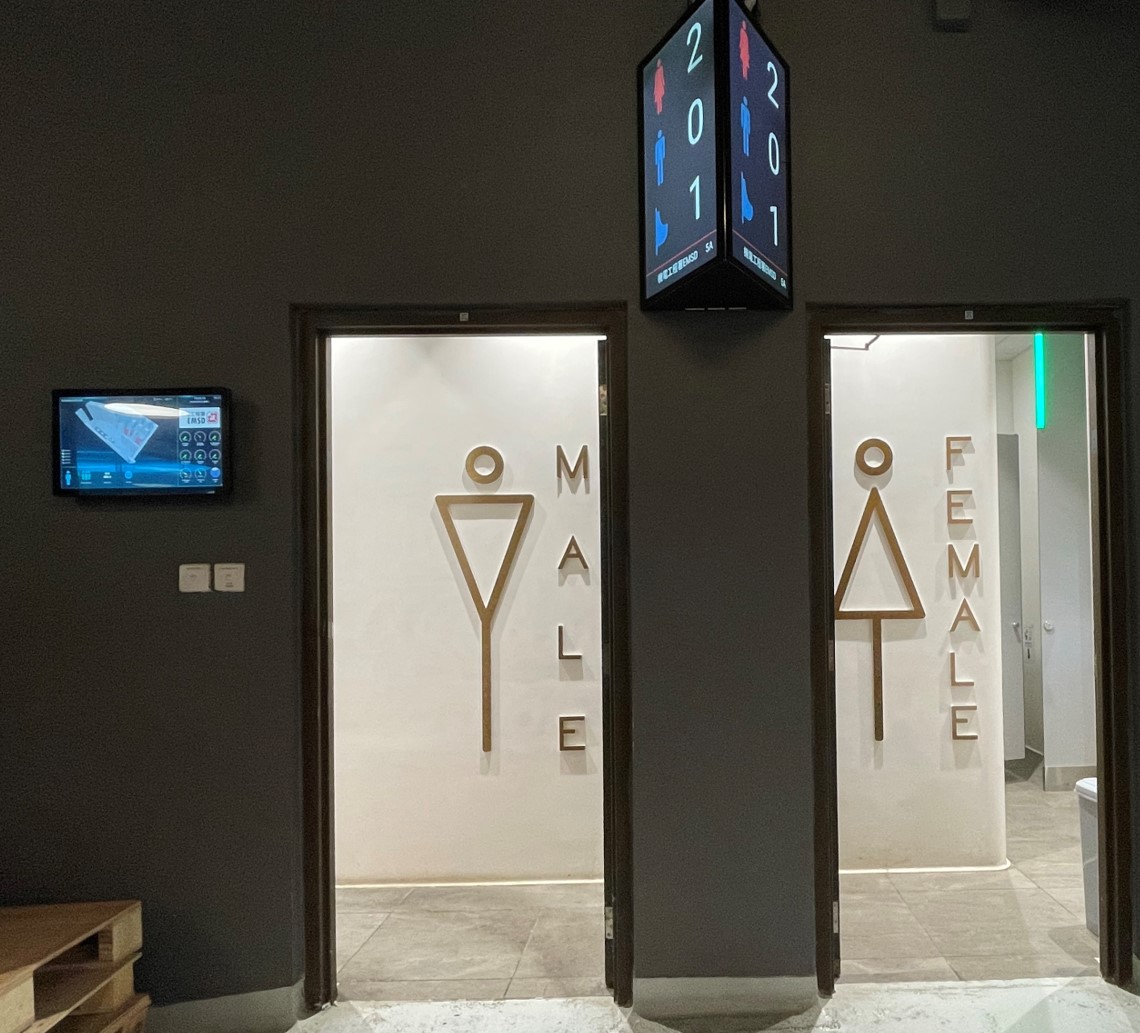
The Smart Toilet Management System leverages various technologies such as Building Information Modeling (BIM), Internet of Things (IoT), and data analytics to provide efficient and convenient toilet management. The relevant IoT devices were installed in 17 public toilets managed by the Food and Environmental Hygiene Department, Leisure and Cultural Services Department and Agriculture, Fisheries and Conservation Department. These devices collect various toilet operation data, including toilet usage, environmental parameters, usage of consumables, the operating status of electrical and mechanical equipment and user feedback. This information can be used to optimise resource allocation, analyse and identify trends, as well as making data-driven decisions regarding facility upgrades or improvements.
| Problem Addressed | People generally have a neutral attitude towards toilets and there are only a few individuals who would take the initiative to inform owners or cleaners about the need to cleanup filthy toilet or remind others to keep the toilets clean. As a result, cleanliness concerns are often unnoticed, leading to less than satisfactory hygiene conditions in public toilets. |
|---|---|
| Innovation | The Smart Toilet Management System incorporates various innovative technologies specifically the Internet of Things (IoT) and non-video based sensing devices in the toilets. These devices collect real-time data on people flow, cubicle usage, air quality, consumable usage, operational status of the electromechanical equipment, etc. All data is transmitted through the Electrical and Mechanical Services Department's Government Wide Information Network (GWIN) to continuously monitor the toilet usage and operational conditions. Through the application of IoT, the system enhances the efficiency of toilet management and improve the quality of service. |
| Key Benefits |
|
| Patent and Award | The 48th International Exhibition of Inventions of Geneva (Silver Medal) |