Smart Drainage – Flood Monitoring System (REF:C-0035)
E&M InnoPortal Trial Project Ref. No.:
Overview
The Smart Drainage – Flood Monitoring System was developed in collaboration between the Drainage Services Department (DSD) and the Electrical and Mechanical Services Department (EMSD) in response to the increasing threat of flooding in Hong Kong caused by storm surges and overtopping waves. This system, which operates around the clock and plays significant role during typhoon season, continuously tracks real-time variations in water levels and flows across rivers, seas, and channels, facilitating early detection and prediction of potential flooding risks.
The system utilises Internet of Things (IoT) sensors and operates on the Government Wide IoT Network (GWIN), leveraging the advantages of Long Range Wide Area Network (LoRaWAN) technology, including wide coverage, low power consumption, low costs, easy installation and maintenance. Additionally, the GWIN supports hundreds of different types of sensors, enabling a wide array of applications to promote innovation and technology development within the client departments.
Looking ahead, the system will further integrate big data analytics, machine learning and AI technologies. These enhancements will strengthen flood monitoring and prevention efforts, contributing to the realisation of a smart city vision in Hong Kong.
| Problem Addressed | Conventional gauging stations for flood monitoring involve extensive planning, construction, and high costs. The long installation process has limited their deployment to all flooding-sensitive locations. The project aimed to overcome these challenges by leveraging LoRaWAN technology and developing a turnkey hydrographic information system that serves as an integrated platform for flood monitoring operations. This approach reduces costs and installation time associated with conventional gauging stations. |
|---|---|
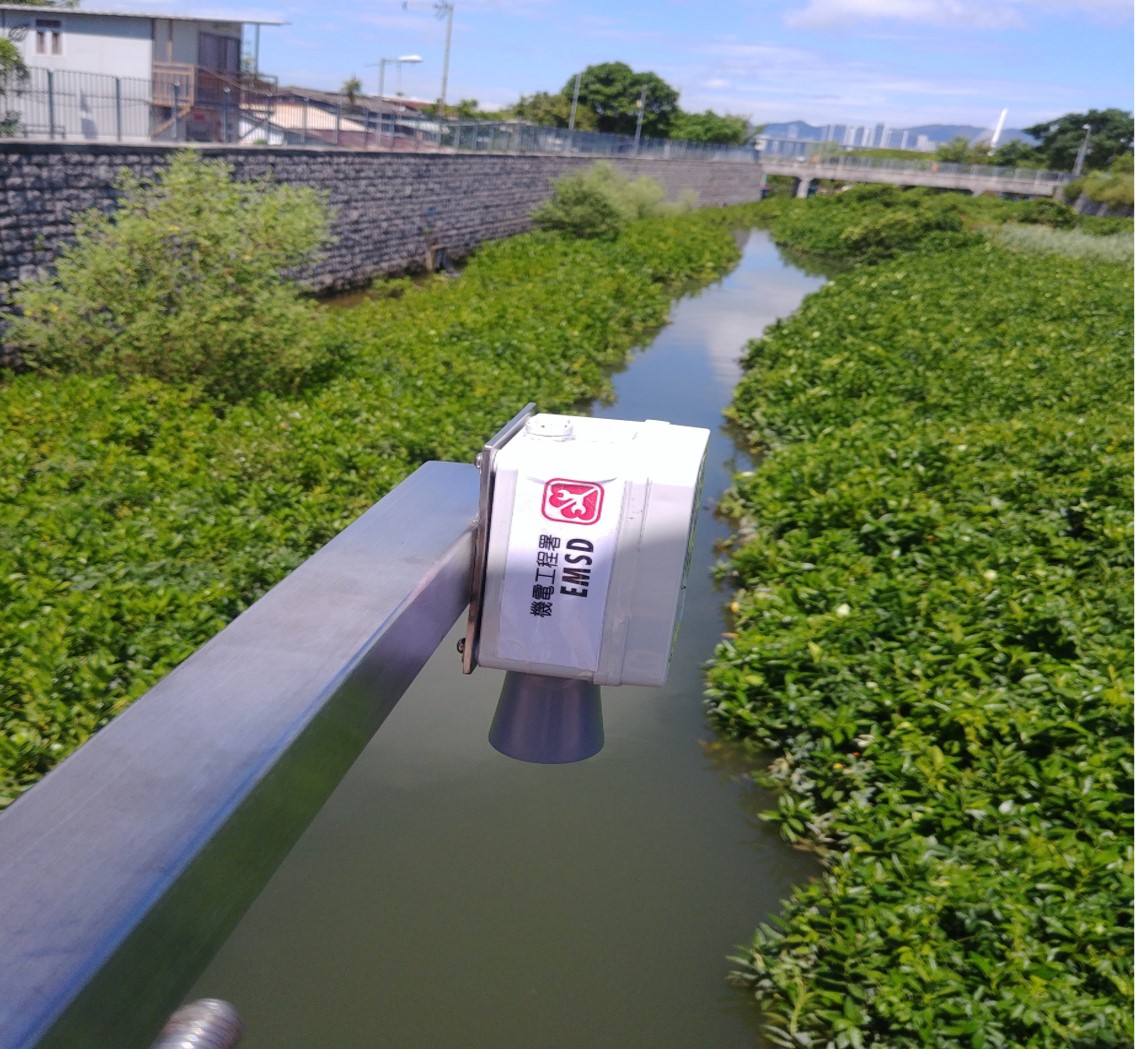
| Innovation | The Smart Drainage - Flood Monitoring System was developed in 2019 to address the threats posed by typhoons and rainstorms. It utilises low-power wide-area network Internet of Things sensors (LPWAN IoT sensors) and Long Range cameras (LoRaCam) of the Government, enabling real-time cross-platform flood monitoring and alarm within the existing drainage system. Integration of data from the Hong Kong Observatory further enhances the system's analysis capabilities. The IoT sensors were installed at storm surge and overtopping wave spots across Hong Kong, all connected to GWIN for real-time monitoring. Over the past three years, the system has rapidly expanded its coverage, reaching 180 flooding-sensitive locations through the utilisation of LoRa IoT sensors. The system comprises IoT sensors, GWIN, and central servers with browser applications. |
| Key Benefits |
|
| Patent and Award | The 48th International Exhibition of Inventions of Geneva (Bronze award) |
| Project Reference | There are more than 100 storm surge spots and overtopping wave spots located all over Hong Kong |