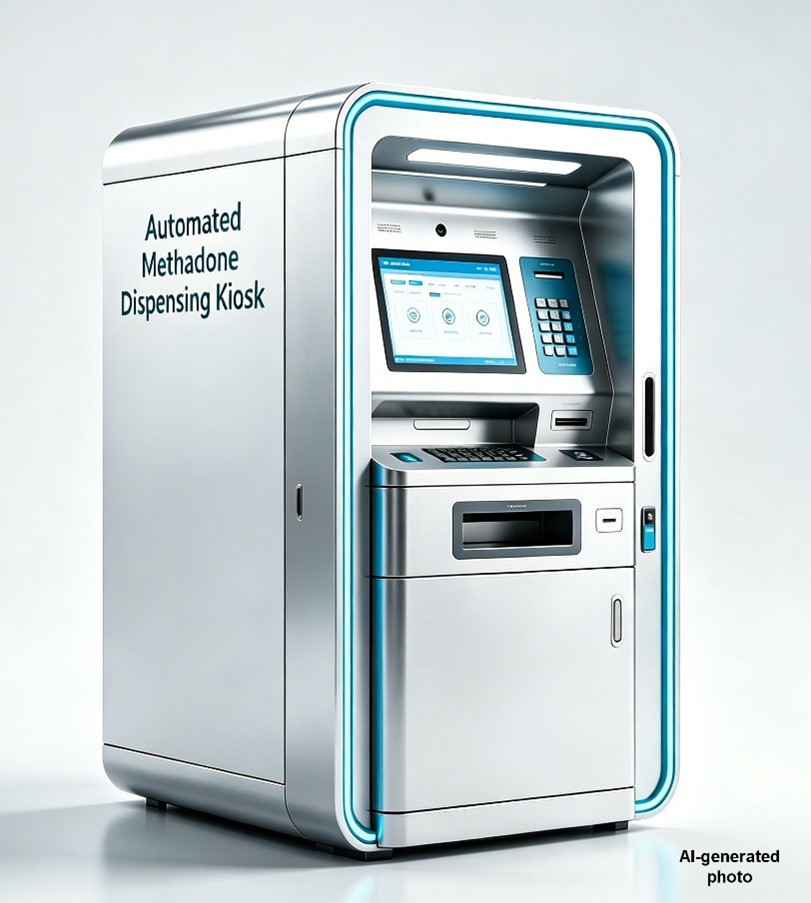
The successful implementation of the Self-service Methadone Dispensing Kiosk (SMDK) system is expected to deliver a comprehensive, safe, efficient, and user-centric solution that modernises methadone maintenance treatment services in Hong Kong. The project aims to achieve the following key outcomes:
Transformation to a Self-Service, Minimal-Staff Operating Model:
Fully automate the end-to-end dispensing workflow, significantly reducing reliance on human manpower. This will enable the development of "human-less" or minimal-staff methadone clinics by transforming the current manual process (from patient identification and attendance taking, treatment eligibility verification, dosage derivation from MTIS, cash or waiver payment handling (including real time enquiry of Medical Waiver Checking System of the Social Welfare Department), receipt issuance, precise dispensing of methadone linctus, patient compliance monitoring, to real-time updating of treatment records) into a seamless, patient self-serviced experience.
Robust Patient Identification and Dual Authentication:
The system will be capable of reading and verifying the patient's Hong Kong Smart Identity Card, combined with dual authentication mechanisms such as facial recognition, alternative biometric identification systems, or other technologies (e.g. iAM Smart), to ensure accurate patient identity verification and eliminate the risk of patient misidentification.
Patient Registration Functionality:
The SMDK is expected to include built-in patient registration functions. During the initial rollout phase, new or first-time users will be able to complete the registration process directly at the kiosk. This includes capturing necessary biometric data (such as facial images) and linking it with the patient's MTIS record, allowing seamless transition from registration to normal self-service dispensing without requiring separate registration stations.
Enhanced Service Accessibility and Patient Experience:
Enable extended or 24/7 service availability, improving convenience for patients. The kiosk will feature a simple, intuitive user interface with bilingual (Chinese and English) text and voice guidance, and a compact, user-friendly design for easy operation and maintenance.
Patient Reminders and Health Promotion:
The SMDK will actively support patient engagement by displaying health promotion and educational messages. It will also deliver timely personalised reminders to patients who are due for clinical assessment or interviews with doctors or social workers, as well as reminders to perform urine opiate tests. For patients found ineligible for treatment on the day, the system will display clear and appropriate messages explaining the reason and any necessary follow-up actions.
Improved Medication Safety and Accuracy:
Achieve high-precision automated dispensing with accuracy within 0.5% by volume (smallest prescribed volume is 0.125ml), incorporating multiple confirmation steps, fault detection, and prevention of mis-dispensing. The system will support clinical protocol-initiated or patient-initiated dosage adjustment where necessary.
Robust Security and Diversion Prevention:
Implement comprehensive security features, including prevention of forced access to storage of controlled drugs, anti-tamper design, and security monitoring with CCTV integration and emergency staff call functions. In particular, an intelligent medication mechanism will monitor the patient's direct consumption in real time using voice and video analysis technologies to verify complete swallowing of the methadone linctus. Any irregularities or non-compliance will trigger immediate alarms and warnings to notify backend staff, thereby preventing drug hoarding and precluding the diversion of controlled drugs to the black market.
Efficient Inventory and Records Management:
Enable real-time interfacing with MTIS for attendance taking, treatment record updating, and prevention of double-dosing. The system will provide daily automated stock-keeping records and notifications for medication and consumables balance to support timely replenishment. It will also support compliance with the Government Financial Management Information System (GFMIS) for payment and receipting functions.
Development of a Central Backend Kiosk Management System:
A dedicated backend management platform will be developed as a central hub to remotely monitor and control all SMDKs across the territory. The system will include user-friendly dashboards displaying real-time drug stock levels, usage statistics, individual kiosk conditions, CCTV feeds, error alerts, warnings, and system performance metrics, enabling proactive management and rapid response by staff. The backend management system will generate comprehensive reports and analytics on usage patterns, peak hours, error rates, patient compliance statistics, and system performance. These insights will support data-driven service planning and continuous improvement of the methadone treatment programme.
Hygiene and Operational Excellence:
Incorporate advanced hygiene controls such as easy-to-clean touchpoints, defined between-patient cleaning protocols, daily self-cleaning of dispenser tubing, and self-calibration capabilities to minimise infection and contamination risks. The system will also maintain the methadone linctus at normal room temperature and prevent exposure to high temperatures to ensure drug quality and stability. The overall design will emphasise simplified installation, operation, and low-maintenance features to facilitate fast and efficient territory-wide deployment.
Inclusivity and Support for Special Needs and Minorities:
The SMDK will incorporate comprehensive accessibility and inclusivity features to cater for diverse patient groups. These include full wheelchair accessibility, enabling wheelchair-bound patients to use the kiosk comfortably and independently with the same level of convenience as other users. The system will also support non-Hong Kong residents by accepting alternative identity documents such as Chinese Mainland Id cards, overseas passports or recognizance forms issued by the Immigration Department. Additionally, mechanisms will be provided for registered patients who forget to bring their HKID card (e.g. alternative authentication methods or temporary access protocols) to ensure service continuity.
Data Security and Privacy Protection:
The SMDK will fully comply with the relevant provisions in the Personal Data (Privacy) Ordinance as well as the Dangerous Drug Ordinance. It will implement strong encryption for data transmission and storage, role-based access control, and secure interfacing with MTIS and other government systems to protect confidential patient information.
Fail-safe Mechanisms and Business Continuity:
The SMDK will incorporate robust fail-safe features, such as automatic alerts to staff during system errors, power backup to ensure safe transaction completion or graceful shutdown, and a manual override mode for authorised staff in emergency situations. This will minimise service disruption and ensure patient safety at all times. The system will support secure remote software updates, configuration changes, and diagnostics, reducing the need for on-site maintenance and enabling faster deployment of enhancements or security patches across all kiosks.
By achieving these outcomes, the project will significantly enhance operational efficiency, medication safety, security, and service quality while addressing current manpower constraints and setting a new benchmark for methadone treatment services in Hong Kong.
|