Multidimensional AI - Aerial Thermal & Automated Lifecycle Asset Solution
| I&T Wish | Multidimensional AI - Aerial Thermal & Automated Lifecycle Asset Solution (REF: W-0619) |
|||||||||||||||
|---|---|---|---|---|---|---|---|---|---|---|---|---|---|---|---|---|
| Matched I&T Solution | ||||||||||||||||
| Trial Project | ||||||||||||||||
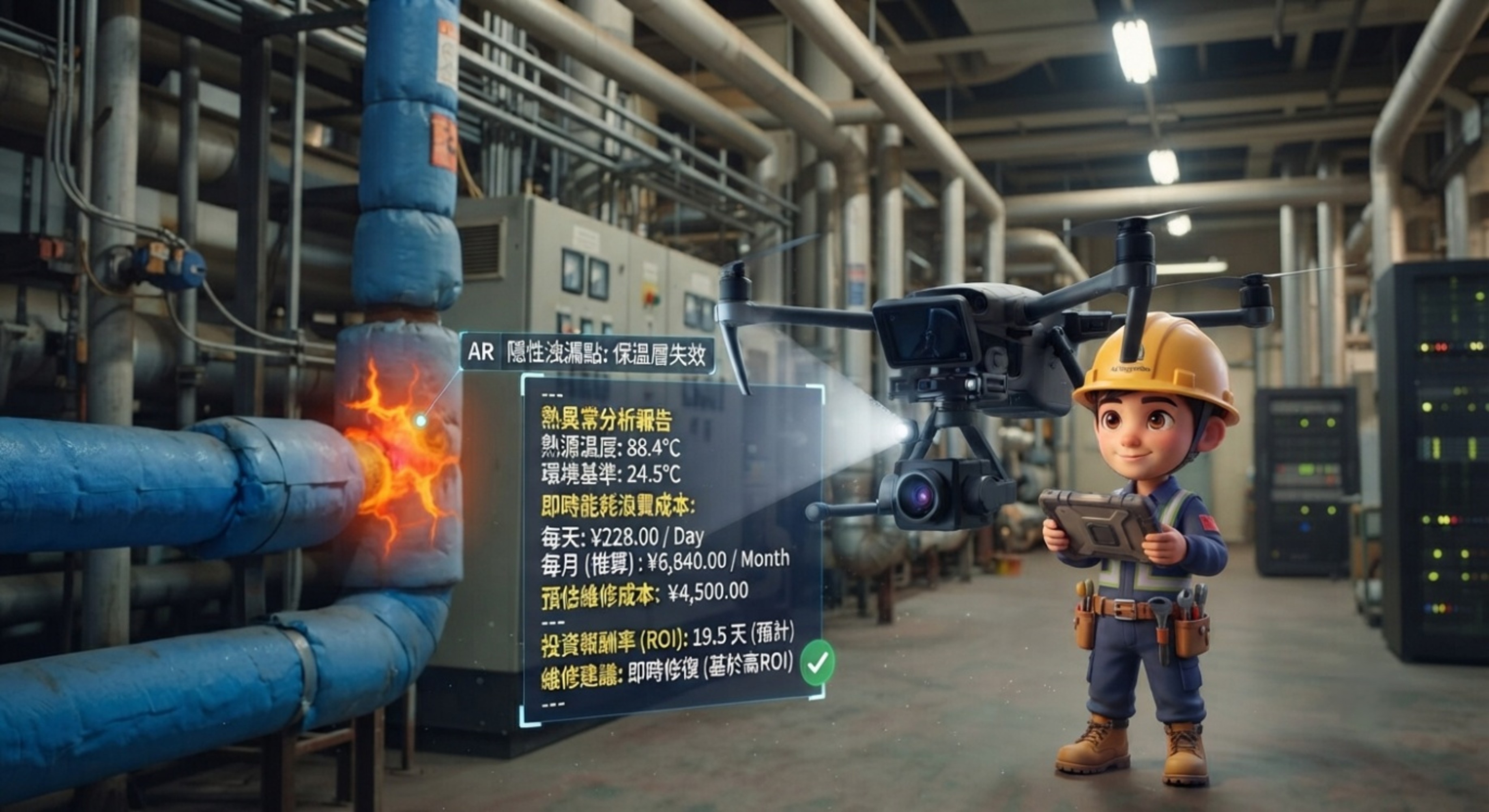
| Summary and Challenges | Large-scale E&M facilities are often located in deep underground basements or reinforced-concrete industrial structures where GPS signals are unavailable. Their interiors contain densely arranged, multi-level high-voltage conduits, large-diameter chilled-water pipes and localised electromagnetic fields, creating a complex and hazardous inspection environment. Inspecting elevated assets manually may require ladders or temporary scaffolding, resulting in significant working-at-height risks and making it difficult to respond quickly when abnormalities are identified. Heavy-duty rotating equipment, such as centrifugal chillers and primary water pumps, is subject to non-linear mechanical wear and bearing pitting. Conventional maintenance generally relies on periodic, point-in-time manual thermal inspections, which cannot effectively track changes in thermal dissipation under varying peak-load conditions. This makes it difficult to identify deterioration at an early stage, leaving critical equipment vulnerable to unexpected mechanical seizure and sudden, widespread cooling-service disruption. In addition, inspection findings are not always communicated immediately to the appropriate maintenance personnel. A platform system is therefore needed to detect and display abnormalities during the inspection, identify the affected asset and location, and promptly notify the responsible maintenance team so that necessary actions can be taken without delay. |
|||||||||||||||
| Expected Outcome | The solution is expected to provide an autonomous inspection capability for complex E&M environments where conventional ground robots are difficult to operate or navigate, such as GPS-denied plant rooms with elevated equipment, densely arranged pipelines and high-voltage components. The autonomous indoor micro-UAV can inspect these areas while generating a spatially accurate 3D digital twin with real-time thermal information. The system will support the real-time detection and localisation of abnormal thermal conditions, insulation defects, micro-leakage and potential mechanical deterioration through high-resolution, high-precision radiometric thermal imaging. The thermal data can accurately identify subtle temperature variations and abnormal heat patterns, while being integrated with spatial information to pinpoint the affected asset and exact location. These inspection results can then be displayed on a centralised platform, enabling maintenance personnel to assess the severity of each issue and respond promptly AI should be used to identify these abnormalities during the inspection process and issue immediate alerts to the relevant maintenance personnel. This will enable the responsible team to take necessary action promptly, reduce the risk of equipment failure and service disruption, and support more effective predictive maintenance and lifecycle asset management. |
|||||||||||||||
| Expected Trial Duration | 7-month | |||||||||||||||
| Contact Information |
|
|||||||||||||||
| Upload Date | 2026-11-03 | |||||||||||||||
| Closing Date | 2026-11-17 | |||||||||||||||
| Propose I&T Solution | Submit Proposal |